What is a Perennial River?
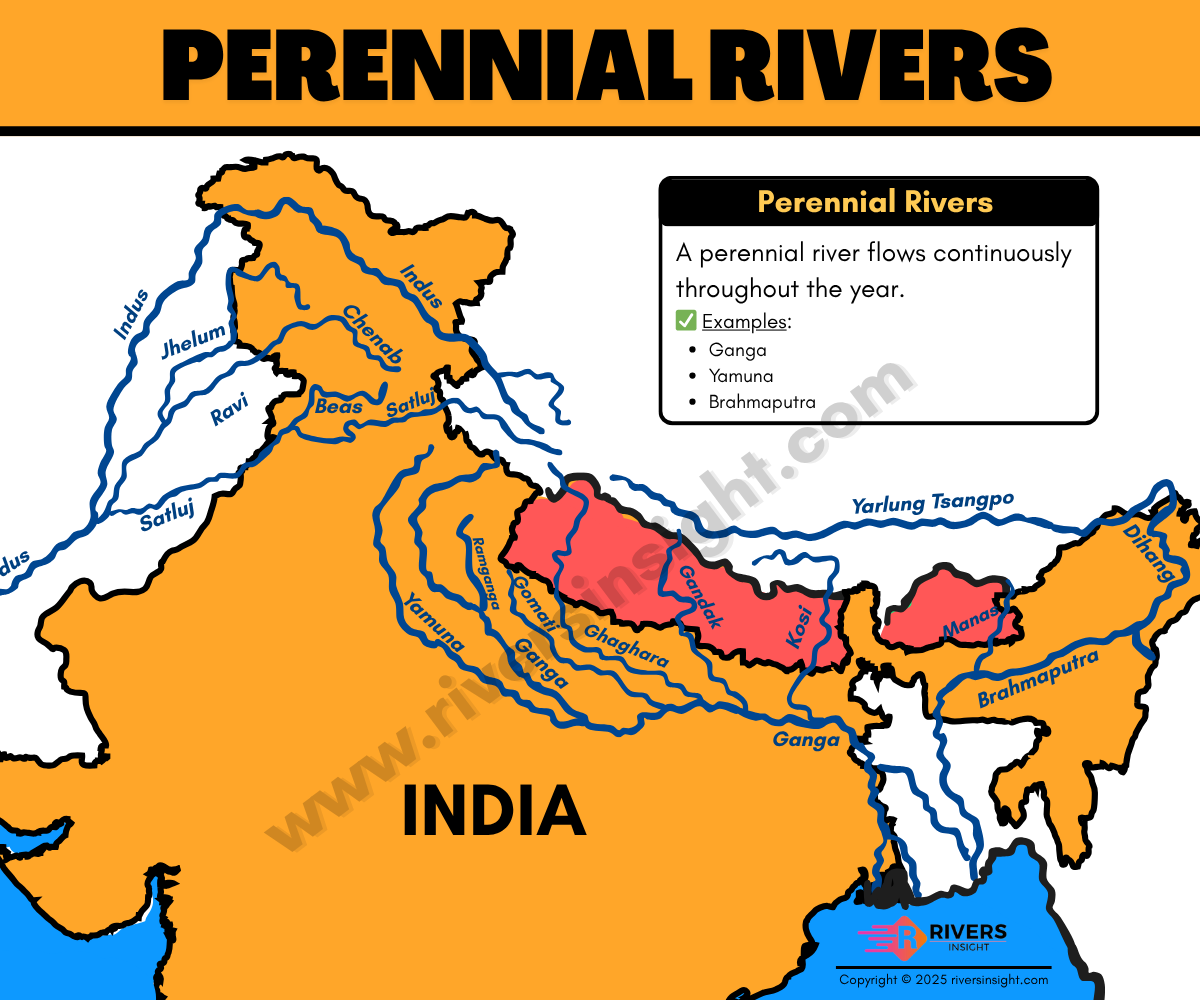
A perennial river is a river that flows throughout the year, regardless of the season. These rivers never dry up and have water even during summer. They are also called ever-flowing rivers.
Characteristics of Perennial Rivers
- They flow all year without drying.
- Their water comes from glaciers, springs, or consistent rainfall.
- Most perennial rivers start from the Himalayas.
- They have a huge basin area and support agriculture and daily needs.
Examples of Perennial Rivers
Here are some well-known examples of perennial rivers in India:
- Ganga River – Originates from the Gangotri glacier.
- Yamuna River – Starts from Yamunotri glacier.
- Brahmaputra River – Flows from Tibet and enters Assam.
- Sutlej River – One of the five rivers of Punjab.
- Beas River – Flows through Himachal Pradesh and Punjab.
- Indus River – Though mostly in Pakistan, it starts from Tibet and enters India.
These rivers never go dry. That’s why people often ask:
- Is Ganga a perennial river?
- Is Brahmaputra a perennial river?
Yes, they are.
Perennial Rivers in South India
While most South Indian rivers are seasonal, a few are perennial.
- Godavari River – Though seasonal in upper parts, it is considered perennial downstream.
- Krishna River – Maintains flow due to dams and tributaries.
- Kaveri River – Considered the most reliable perennial river in South India.
So, if you’re wondering:
- Is Kaveri a perennial river? → Yes.
- Is Godavari a perennial river? → Mostly, especially in lower stretches.
List of Perennial Rivers in India
| River Name | Origin | States/Regions Covered | Confluence / Ends In |
|---|---|---|---|
| Ganga | Gangotri Glacier, Uttarakhand | Uttarakhand, UP, Bihar, Jharkhand, West Bengal | Bay of Bengal |
| Yamuna | Yamunotri Glacier, Uttarakhand | Uttarakhand, Haryana, Delhi, UP | Joins Ganga at Prayagraj |
| Brahmaputra | Angsi Glacier, Tibet | Arunachal Pradesh, Assam | Bay of Bengal (via Bangladesh) |
| Sutlej | Rakshastal Lake, Tibet | Himachal Pradesh, Punjab | Indus River in Pakistan |
| Beas | Beas Kund, Himachal Pradesh | Himachal Pradesh, Punjab | Sutlej River |
| Chenab | Bara Lacha Pass, Himachal Pradesh | Himachal Pradesh, J&K | Indus River (in Pakistan) |
| Jhelum | Verinag Spring, Jammu & Kashmir | J&K | Chenab River |
| Ravi | Himalayas near Chamba, HP | Himachal Pradesh, Punjab | Chenab River (in Pakistan) |
| Indus | Tibetan Plateau | J&K (India), majority flows in Pakistan | Arabian Sea |
| Kosi | Nepal Himalayas | Bihar | Ganga River |
| Gandak | Nepal Himalayas | Bihar, UP | Ganga River |
| Ghaghara | Tibet/Nepal | UP, Bihar | Ganga River |
| Teesta | Tso Lhamo Lake, Sikkim | Sikkim, West Bengal | Brahmaputra River |
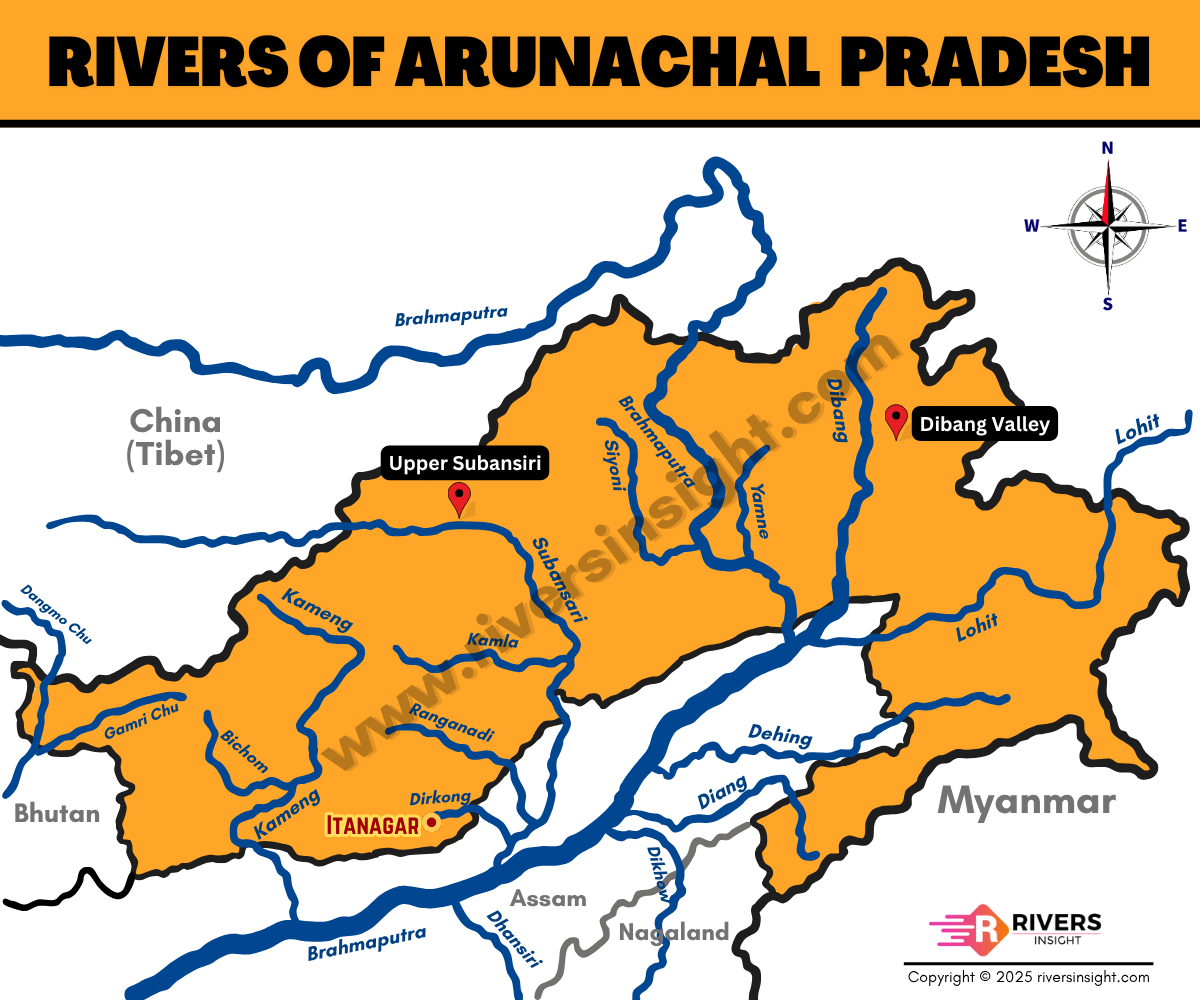
| Subansiri | Himalayas (Tibet) | Arunachal Pradesh, Assam | Brahmaputra River |
| Lohit | Eastern Tibet | Arunachal Pradesh | Brahmaputra River |
| Dibang | Arunachal Pradesh | Arunachal Pradesh | Brahmaputra River |
| Tons | Uttarakhand | Uttarakhand, UP | Yamuna River |
| Ramganga | Kumaon Hills, Uttarakhand | Uttarakhand, UP | Ganga River |
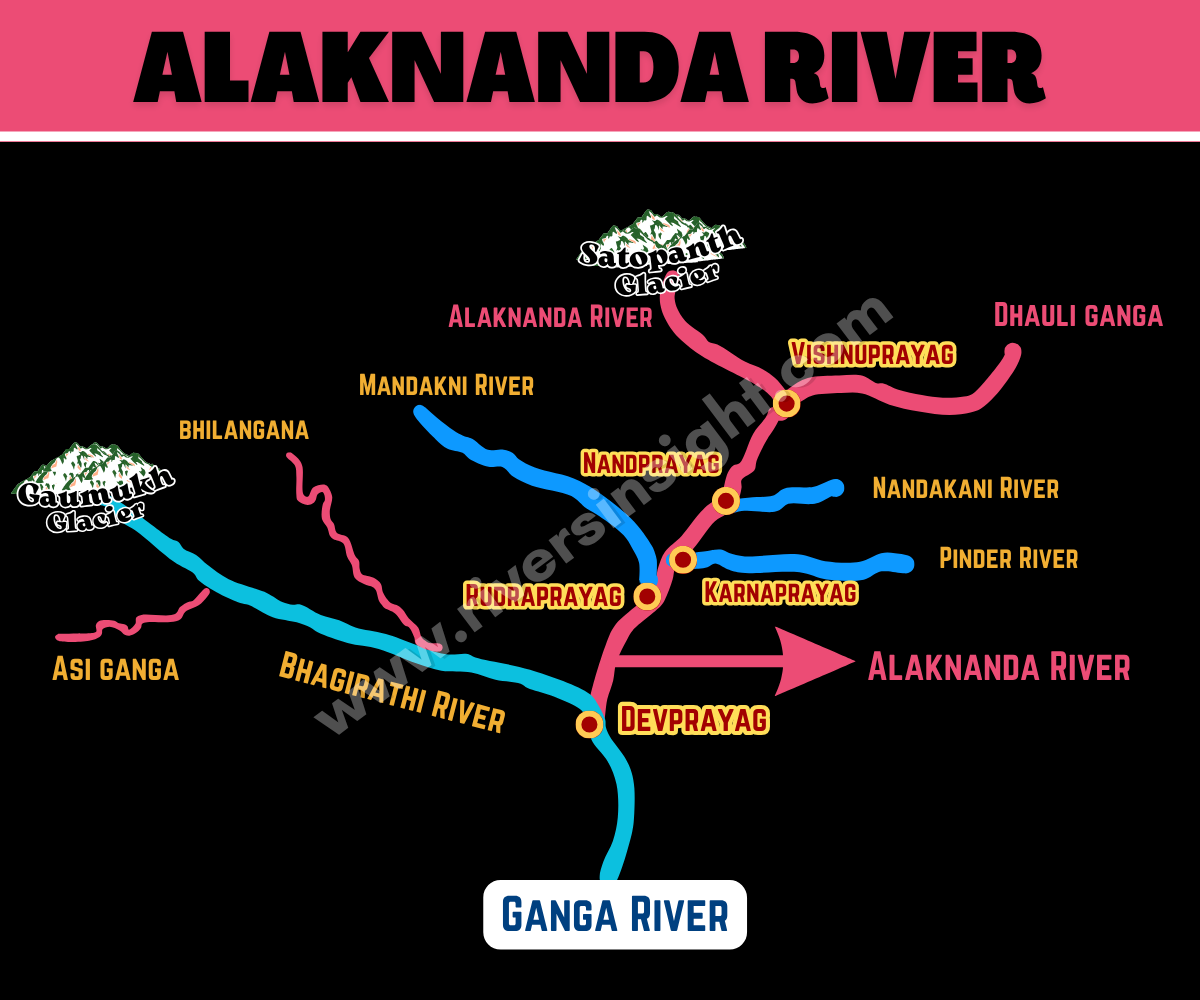
| Alaknanda | Satopanth Glacier, Uttarakhand | Uttarakhand | Ganga (via Devprayag) |
| Bhagirathi | Gangotri Glacier, Uttarakhand | Uttarakhand | Merges with Alaknanda at Devprayag |
| Kaveri | Talakaveri, Karnataka | Karnataka, Tamil Nadu | Bay of Bengal |
| Krishna | Mahabaleshwar, Maharashtra | Maharashtra, Karnataka, Andhra Pradesh | Bay of Bengal |
| Godavari | Trimbak, Maharashtra | Maharashtra, Telangana, Andhra Pradesh | Bay of Bengal |
| Periyar | Western Ghats, Kerala | Kerala | Arabian Sea |
| Narmada | Amarkantak, Madhya Pradesh | MP, Maharashtra, Gujarat | Arabian Sea |
| Tapi | Satpura Range, Madhya Pradesh | MP, Maharashtra, Gujarat | Arabian Sea |
| Mahanadi | Sihawa, Chhattisgarh | Chhattisgarh, Odisha | Bay of Bengal |
| Sharavati | Western Ghats, Karnataka | Karnataka | Arabian Sea |
What is a Non-Perennial River?
A non-perennial river is a river that flows only during the rainy season. These rivers dry up during summer.
Examples of non-perennial rivers:
Such rivers depend completely on rainfall. Hence, they are also called seasonal rivers.
Difference Between Perennial and Non-Perennial Rivers
| Perennial River | Non-Perennial River |
|---|---|
| Flows throughout the year | Flows only during rainy season |
| Glaciers, springs | Rainfall |
| Himalayan region | Peninsular region |
| Ganga, Yamuna, Brahmaputra | Vamsadhara, Musi, Swarnarekha |
Why are Himalayan Rivers Perennial?
Himalayan rivers remain full because:
- They are fed by glaciers that melt slowly all year.
- The region receives snowfall and rain regularly.
- They have a huge catchment area.
Most of the Himalayan rivers are perennial in nature.
Perennial rivers are the backbone of India’s river system. They ensure water supply throughout the year and support millions of lives. Most of these rivers come from the Himalayas, while a few also exist in the south.
Want to learn more about India’s rivers by state?
👉 Check out our detailed guide: Rivers of India with Map